If you live in a pre-1960 Toronto or GTA home with no ductwork (or with the kind of patchwork radiator-and-window-AC setup that defines half the housing stock between Riverdale, Cabbagetown, the Junction, Leslieville, and East York), the question of “how do we get real heating and cooling without tearing the house apart” almost always lands on the same answer: a cold-climate ductless mini-split. The technology has matured, the rebate landscape just shifted in a way that catches a lot of homeowners by surprise, and spring 2026 is when most installs get booked for late-spring through early-fall completion. This is the spec-and-cost guide we wish more GTA homeowners had before signing.
Why mini-splits keep coming up for older GTA homes
The structural reality of pre-1960 Toronto/GTA housing is that adding central ducts is brutal. You either lose 6-10 inches of ceiling height in finished basements running mains, eat into closet space for vertical chases, or both. A mini-split sidesteps that entire problem. One outdoor condenser, refrigerant lines and a small condensate line through a 3-inch wall sleeve, and a wall-mounted (or ceiling-cassette, or floor-mount) head in each room you actually use. Drywall damage is small and patch-and-paintable. No furnace room, no return-air grilles, no humidifier-on-the-supply-trunk follow-up arguments two years in.
The other shift is performance. Cold-climate inverter compressors from Mitsubishi (Hyper-Heat / H2i), Daikin (Aurora), Fujitsu (Halcyon), LG (LGRED), and Carrier (Greenspeed) now hold full rated capacity down to roughly -15 °C and continue producing meaningful heat into the -25 to -30 °C range. That means a properly sized cold-climate mini-split can carry a Toronto home through almost the entire heating season without backup, with electric resistance or an existing gas furnace catching the handful of -25 °C nights per year.
The 2026 rebate landscape (this is the part most homeowners get wrong)
The single biggest change since this conversation was last common at GTA kitchen tables: the Canada Greener Homes Grant stopped accepting new applications in 2024 and the program closed for document submissions on December 31, 2025. The federal grant portion that paid up to $5,000 toward a cold-climate heat pump is gone for new projects.
What remains is a stack of three things, and you should know all three:
The Canada Greener Homes Loan is still open. Up to $40,000, interest-free, ten-year term. Requires a pre-retrofit EnerGuide evaluation by a registered energy advisor (typical cost $400-$700) to qualify. It is not a grant — you pay it back — but at zero interest over a decade on a $15,000 install, the implicit subsidy versus a HELOC is significant.
The Ontario Home Renovation Savings Program is currently confirmed through November 2026. It pays a per-measure rebate on heat pump installs (typical Ontario range $1,000-$7,500 depending on system type and home characteristics, with cold-climate ducted-equivalent installs getting the higher end). The program reserves the right to be modified or discontinued at any time, so do not budget around its existence past the work order.
The Enbridge Home Efficiency Rebate Plus (HER+) layers on top, up to $1,500 for qualifying heat pump installs paired with the right gas-furnace handoff or dual-fuel setup. It requires participation through a registered energy advisor, which is the same advisor who handles the Greener Homes Loan EnerGuide, so the paperwork batches.
The City of Toronto BetterHomesTO loan program is the fourth layer, available specifically to Toronto homeowners. Up to $125,000, low-interest, repaid through your property tax bill. Most homeowners do not need this for a mini-split alone, but if you are bundling the install with insulation, windows, or a panel upgrade, it can collapse the financing into one repayment line.
The total realistic rebate stack for a 2026 GTA cold-climate mini-split install is $2,500 to $6,500 in direct money plus the loan financing, depending on whether you go single-zone or multi-zone, whether you replace gas (better rebates) or stack (worse), and how thoroughly your contractor and energy advisor work the application paperwork. The companion thread on GTA HVAC Spring 2026: Tune-up Timing + $10K Rebate Stack walks through the full rebate-stack worksheet across furnace and AC alongside heat pump systems, and the comparison thread Ontario HVAC 2026: Gas Furnace vs. Cold-Climate Heat Pump vs. Hybrid System covers the dual-fuel decision tree if you are keeping a gas furnace as backup.
Cold-climate models that actually carry a Toronto winter
The shorthand most GTA homeowners hear from friends is “Mitsubishi”, and that is not wrong, but the model line matters. The relevant Mitsubishi designation is Hyper-Heat (H2i), which is the cold-climate variant of the regular MUZ/MXZ outdoor units. The single-zone equivalent for older homes with no ductwork is the ZUBA Single, rated to -30 °C ambient. The multi-zone equivalent connects up to 8 indoor heads to one outdoor — useful for whole-house retrofits but not always the right answer.
Daikin’s cold-climate line is Aurora and Atmosphera, with the latter sometimes pricing better on the same spec sheet for downtown condo single-zone work. Fujitsu’s Halcyon XLTH variant matches the Mitsubishi Hyper-Heat in nameplate cold-climate output. LG’s LGRED° line and Carrier’s Greenspeed are functionally comparable, and your installer’s training/preferred-stocking relationship usually decides which brand lands on your wall.
The number that actually matters on the data sheet is rated heating capacity at -15 °C and at -25 °C, not the SEER2 rating and not the AHRI heating capacity at +8.3 °C. The -15 °C number is the one you need to compare against your home’s design heat loss; the +8.3 °C number is roughly twice that and will mislead you into undersizing.
Single-zone vs multi-zone: when each makes sense
Single-zone is the right answer when (a) you are heating-and-cooling one room or open-plan area that needs it most, (b) the room has an exterior wall that the line set can hit cleanly, and (c) the rest of the house has acceptable existing heat (radiators, baseboards) and you can live without AC in the rest of the house. Most downtown Toronto condos and main-floor great rooms in the inner suburbs land here.
Multi-zone makes sense when you want whole-house comfort in a house with no ducts. The trade-off most contractors do not explain on the first call is the diversity penalty: a multi-zone outdoor unit cannot independently modulate output to each indoor head. When only one head is calling for cooling, the unit short-cycles inefficiently, dumps moisture, and runs colder than you want. Two heads of similar size calling at once is the optimum operating mode, and if your usage patterns are “one room at a time”, you may actually do better with two single-zone systems than one 2-zone multi.
The other multi-zone gotcha is the line-set length cap. Most outdoor units rate maximum total line-set across all heads at 70-100 metres, with a per-head cap around 25-30 metres and a vertical separation cap of 15 metres. A four-storey East York rowhouse with the outdoor unit in the back yard and heads on three floors can absolutely hit those caps; the install plan should include a line-set drawing, not a verbal “yeah, no problem.”
Sizing: do not match BTU to square footage
The contractor sizing rule of thumb you will hear is “12,000 BTU per 500 square feet”, and it is wrong often enough that it deserves to be retired. The right input is a Manual J load calculation — a room-by-room heat-loss and heat-gain estimate that accounts for insulation, window U-value, infiltration, orientation, and occupancy. CSA F280-12 is the Canadian equivalent that energy advisors use. A one-page Manual J printout should be part of your install proposal.
Pre-1960 Toronto homes with single-pane or original double-pane windows, knob-and-tube remnants in exterior walls, and original lath-and-plaster routinely calculate 35-45 BTU/sq ft of design heat loss at -22 °C outdoor. A renovated 1990s-or-newer home with proper insulation calculates 18-25 BTU/sq ft. Same square footage, very different system size.
Oversizing is worse than undersizing on a mini-split. An oversized inverter compressor will run at minimum modulation, short-cycle, fail to dehumidify properly, and feel clammy in summer. An undersized unit will run flat-out and miss capacity on the coldest week. Get the load calculation done.
Electrical load math (the part most quotes ignore)
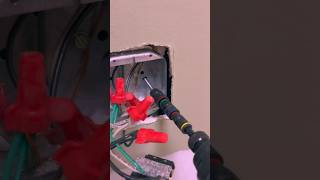
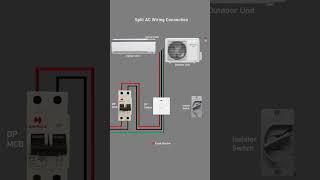
Every outdoor mini-split unit needs a dedicated 240V circuit with a properly sized breaker (typically 15-30 A depending on capacity), a code-compliant disconnect within sight of the outdoor unit, and the line-set/condensate/cabling protected through the wall sleeve. Each indoor head has its own communication and condensate, but the load is on the outdoor unit’s circuit.
Multi-zone systems need bigger feeds: a 3-zone Hyper-Heat outdoor unit typically sits on a 30 A circuit with 10 AWG copper. If you are running multiple multi-zone systems or stacking heat pump capacity onto an older Toronto 100A service, you can hit panel capacity quickly. Many GTA mini-split installs trigger an upstream 100A → 200A panel upgrade at $2,500-$4,500 plus ESA permit ($150-$300), and this is the line item that disappears from the headline-cost quote and shows up at change-order time. The deep-dive thread on Ontario 200A Electrical Panel Upgrade: Process, Utility Coordination & 2026 Costs covers the Toronto Hydro/Alectra/Hydro One coordination side and the ESA inspection sequence in detail.
Before signing, ask: (1) what is the rated MCA and breaker size for the outdoor unit, (2) what is my current main panel rating and remaining capacity, (3) does the install require a panel upgrade or sub-panel, (4) is the ESA permit included or extra. If your contractor cannot answer (2) without looking, they have not opened your panel cover.
Real GTA spring 2026 cost breakdown
These bands are based on currently published Toronto-area installer pricing cross-referenced against multi-zone configurations our team has watched go through homeowner-comparison threads this spring. Numbers are pre-rebate, all-in (equipment + install + permit + standard 25 ft line set):
A single-zone 9,000-12,000 BTU cold-climate system in a downtown Toronto condo or single-room application typically lands $4,200-$6,500. Equipment is usually a Mitsubishi MSZ-FS09 / MSZ-FS12 with the matching Hyper-Heat outdoor, or the comparable Daikin Aurora. Add $400-$800 for a deluxe wall head with built-in air filtration, $300-$600 for a ceiling cassette swap, $500-$1,000 for floor-mount instead of wall-mount.
A two-zone 18,000-24,000 BTU system in a semi-detached covering main-floor open area + master bedroom typically lands $7,200-$10,800. The line-set runs are short, the panel work is usually within existing service, and the install is a one-day job for a two-person crew on the indoor side plus a half-day for the outdoor and electrical.
A three-zone 30,000-36,000 BTU system in a detached covering main-floor + two upper bedrooms typically lands $10,500-$15,500. This is the configuration where panel-upgrade decisions get triggered most often — if your service is 100 A and the existing furnace is staying as backup, the load math gets tight fast.
A whole-house four-to-six-zone replacement of a non-functional gas system typically lands $16,000-$26,000 before rebates, $11,000-$21,000 after. This is also where the ducted heat pump alternative (Mitsubishi ZUBA Central, Carrier Greenspeed central, Daikin Vision) starts to compete on price and finished-look — you lose some of the ductless retrofit-friendliness, but if you have any usable ductwork at all, a properly sized ducted central cold-climate heat pump is often the better answer at $14,000-$22,000.
Polymeric-sand-style “we will install your $4,000 12,000 BTU mini-split for $3,200 cash, no permit” quotes still circulate every spring. These are almost always uncertified installers running line sets without proper insulation, skipping the ESA permit, charging only the refrigerant-pre-charged system, and leaving the homeowner with no manufacturer warranty enforcement (Mitsubishi/Daikin/Fujitsu warranties require certified-installer paperwork; brand authorized installers register the warranty for you). The savings vanish on the first compressor failure outside year 5.
Spring 2026 contractor vetting
The four verifications that actually matter for a Toronto/GTA mini-split install, in order:
(1) TSSA gas certification is not relevant for ductless mini-splits (no gas), but the installer needs to be HRAI-registered or an authorized dealer for the brand they are quoting (Mitsubishi Diamond Contractor, Daikin Comfort Pro, Fujitsu Elite, etc.) — that is what activates the manufacturer warranty.
(2) ESA permit number on the quote, not “we’ll get it after.” Electrical work on the dedicated circuit and any panel work is permit-required in Ontario.
(3) Manual J or CSA F280-12 load calculation as part of the proposal, with a printed room-by-room sheet, not “we’ll size it on install day.”
(4) Refrigerant line-set drawing with total length, vertical separation, and head-by-head per-head length — especially for multi-zone systems.
If a contractor cannot produce all four for a $12,000+ install, get another quote. Three quotes is the minimum for a system this size in this market, and the spread between honest quotes will narrow once you ask for those four documents at the front of the conversation.
Bottom line
For a pre-1960 GTA home with no usable ductwork, a cold-climate mini-split is genuinely the right answer in 2026 — better than the same conversation was even three years ago. The Greener Homes Grant ending changes the math but does not break it; the Loan plus Ontario Home Renovation Savings plus Enbridge HER+ still recovers a meaningful chunk of the install cost, and the avoided cost of central duct retrofit (often $8,000-$15,000 of partition work, ceiling drops, and finishing) is the largest line item nobody puts on the comparison spreadsheet.
The decisions worth making well, in order: get a Manual J / CSA F280-12 load calculation done before sizing, choose cold-climate (Hyper-Heat / Aurora / Halcyon XLTH / LGRED° / Greenspeed) at the -15 °C rating, do the panel-capacity math before signing, and prefer two single-zone systems over one mismatched multi-zone where the usage pattern is “one room at a time.”
Track $RENO earnings on this topic — top contributors at the homeowner-and-trades intersection are tier-up candidates. Helpful posts about your own GTA mini-split install (especially with photos of the line-set sleeve, condensate routing, and the equipment nameplate) earn $RENO. Welcome to $RENO — Quests, Rewards, Leaderboard explains the tier ladder and quest categories. Link a Solana wallet on signup so you can claim your earnings when on-chain settlement opens.
More from LF Builders & home.renovation.reviews
LF Builders has served the Greater Toronto Area for over 50 years with more than 30,000 completed renovation and construction projects. From interlock and flagstone to full kitchen and bathroom renovations, waterproofing, and aluminum work — explore services and request a quote at lfbuilders.ca.
Samm Simon’s 251 KM Challenge for Cancer Research — LF Builders is proud to support Samm Simon’s 251 km charity run raising funds for cancer research. Follow the journey and donate at sammsimon.ca.
Further reading on the LF Builders blog: Comprehensive Home Renovation Trends: What GTA Homeowners Are Building — practical detail that pairs well with the topic above.