Most homeowners think about a whole-house humidifier in late October when the heating season hits and the windows stop dripping but the hardwood starts to gap. By that point every HVAC shop in the GTA is running 4-6 weeks out, and the install gets squeezed into the same week as furnace tune-ups and the first cold-snap furnace failures. Spring booking gets you a relaxed install with the unit ready to go for next winter, often at 10-15% lower labour rates because installers aren’t booking around emergencies.
The real decision is between three install styles, with brand selection within each style being the smaller part of the choice. There is also one Ontario Building Code rule about the water connection that most homeowners and a surprising number of installers don’t follow.
The three install styles, in plain language
A bypass humidifier is the most common GTA install. It mounts on the side of your furnace’s return or supply duct, runs a small bypass duct between the two, and uses a wet evaporator pad to add moisture to the air the furnace pushes through. It only adds humidity when the furnace fan is running. Cost is the lowest of the three styles and the install is the simplest. The trade-off is moderate output and dependency on furnace runtime, which on milder GTA winter days can leave you a few percentage points below your humidity target.
A fan-powered humidifier is a bypass design with its own internal fan, which means it can add humidity even when the furnace is idle. Output is roughly 10-15% higher than the equivalent bypass model and the unit can hit your humidity target on milder days when the furnace cycles less. Install cost is higher because the unit is more expensive and needs its own electrical connection. Most GTA installs land on a 24V transformer tap from the furnace control board, which is fine for code but adds 15-20 minutes to the labour.
A steam humidifier is the only style that’s genuinely independent of furnace operation. It boils water in a small electrode tank, releases the steam into the supply duct, and produces humidity on demand regardless of whether the furnace is firing. This is the right call if your home is over about 3,500-4,000 sqft, if your indoor conditions are very dry (south-facing radiant heat, lots of ventilation, persistent under 25% RH in deep winter), or if you want the precision of an actual setpoint instead of a slow approach. The unit is significantly more expensive, requires a dedicated 240V circuit on most models, and uses more electricity than either bypass option. It is also the most consistent performer in the deep-winter weeks where the rest of the city is hovering around 20% RH.
The sizing math, with actual numbers
Capacity is rated in gallons per day (GPD). Your home’s actual demand depends on square footage, construction tightness, ventilation rate, and your humidity target.
As a working baseline for typical GTA construction (1990s or newer, average air sealing):
A bypass unit at 12-17 GPD covers homes up to roughly 2,500 sqft. The popular Aprilaire 600 sits at 17 GPD and is a strong fit for 1,800-2,500 sqft GTA homes. The Honeywell HE240 covers a similar range. The Skuttle 190 series sits at the bottom of the bypass tier with around 12 GPD and is best for under 2,000 sqft.
A fan-powered unit at 17-19 GPD covers homes up to about 3,000-3,500 sqft. The Aprilaire 700 is the workhorse here at 18 GPD. The Honeywell HE360 is the comparable fan-powered option in the same range.
A steam unit at 11-34 GPD (depending on model and electrical service) covers homes from 3,500 sqft up to genuinely large homes. The Aprilaire 800 is the dominant steam model in the GTA. The Honeywell HM750 is the primary competitor.
The “tight construction” sqft ratings on the manufacturer brochures (Aprilaire 600 at 5,000 sqft, for example) assume newer high-performance air sealing that very few GTA homes actually have. Discount the brochure rating by about 30-40% to land at a realistic GTA capacity for normal construction.
If you have a 1950s post-war bungalow with original windows and an unfinished basement, you can size up one tier from the brochure baseline. If you’ve done a recent air-sealing retrofit (blower door under 3 ACH50), the brochure baseline holds.
Real GTA install costs, Spring 2026
These are real GTA installer numbers from the past 60 days. There is meaningful spread because shop overhead and homeowner-supplied vs installer-supplied units shift the math.
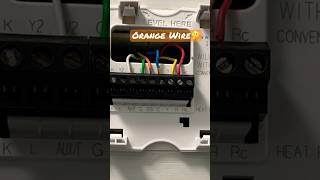
Basic bypass install with a Honeywell HE240 or Aprilaire 600 runs $700 to $1,200 all-in. The unit itself is $200-$400. Install takes 2-3 hours and includes ductwork connections, a 24V tap from the furnace board, a humidistat (basic dial type), and a saddle valve into the cold water line. Higher end of the range is for installs with longer water-supply runs or a condensate pump if the floor drain is far from the unit.
Fan-powered install with an Aprilaire 700 or Honeywell HE360 runs $900 to $1,500. The unit itself is $400-$600. Same install effort as bypass, but the higher unit cost plus the slightly more complex electrical connection pushes the total up. Some installers throw in an outdoor-temperature-sensing humidistat at this tier; others keep that as an upsell.
Steam install with an Aprilaire 800 or Honeywell HM750 runs $2,000 to $4,200. The unit is $1,000-$1,800. Install takes 4-5 hours and requires a dedicated 240V circuit, which means panel space and a permitted electrical job. If your panel is full, add $500-$1,500 for a sub-panel. If your panel is tight on amps, the steam install is the trigger that forces a service-upgrade conversation. Total all-in including electrical work commonly lands $3,500-$5,500 for steam.
Outdoor-temperature-sensing humidistat upgrade adds $150-$300 to any of the above. This is the single best add-on. The dial-type humidistat that ships with most bypass units does not adjust setpoint based on outdoor temperature, which is the entire reason GTA homes get window condensation in February.
The OBC consideration most homeowners don’t know about
Whole-house humidifiers tap into the cold-water plumbing, usually with a saddle valve in the basement near the furnace. The Ontario Building Code (Section 7) requires that any plumbing connection serving an HVAC component be a sweated or compression connection, not a self-piercing saddle valve, on new installs in many municipalities. Toronto and most surrounding GTA municipalities have inspectors who will fail a saddle-valve install on a permitted job.
The practical workaround that meets code is a stop-and-waste valve teed off the cold-water line with a compression fitting to a 1/4" copper or PEX tube to the humidifier solenoid. Adds $50-$100 in parts and 30 minutes of labour. Worth it both for code compliance and because saddle valves are the single most common source of slow water leaks behind a furnace in older GTA installs.
If you’re going through a renovation that involves a permit and an inspector, ask the installer to use the stop-and-waste valve approach from the start. If you’re a DIY install on an existing system not under a permit, the saddle valve is what most retrofit installers use and what most online guides describe. Plan to inspect that connection annually because it is a known failure point.
The annual maintenance reality
The single biggest reason whole-house humidifiers underperform in the GTA is skipped pad replacement. Toronto water is moderately hard (around 8-10 grains per gallon depending on neighbourhood) and the mineral buildup on the evaporator pad reduces water absorption surface within 4-6 months of continuous use.
The right rhythm is: replace the pad in October when you start the furnace for the season, again in late January or early February if you run the unit aggressively, and clean the housing in April when you shut it down for summer. Pads are $20-$40 each. The whole annual maintenance cost is under $100 in parts if you do it yourself, or $150-$250 if you have a service tech do the spring shutdown and fall startup.
The damper position is the other piece most homeowners miss. Bypass humidifiers have a manual damper handle on the bypass duct that needs to be set to WINTER in fall and SUMMER in spring. Leaving the damper in WINTER position when the AC runs causes warm humid air to bypass the cooling coil and reduces AC efficiency. Leaving it in SUMMER when the heat runs in fall starves the humidifier of airflow. Two minutes twice a year, but easy to forget.
The over-humidification failure mode (and why mold remediation is downstream of humidifier setpoint)
The single most expensive humidifier mistake we see in the GTA is setting the indoor target above 40% RH in cold weather and leaving it there. By February it shows up as window condensation, then frost on the inside of single-pane basement windows, then water staining on the drywall around window frames, then visible mold on the cooler exterior wall surfaces. We covered the cleanup side of this in our recent GTA Mold Remediation Spring 2026 guide. The cheaper fix is the humidistat setpoint upstream.
The right humidity target tracks outdoor temperature. At -25°C outside, target indoor RH is around 25%. At -10°C, around 30%. At 0°C, around 35%. At +10°C, around 40%. Dial humidistats don’t do this automatically; outdoor-temperature-sensing humidistats do. If you bought a Nest, Ecobee, or Honeywell smart thermostat, many of them can drive the humidifier directly with an outdoor-temperature feedback loop. That is one of the under-appreciated reasons to upgrade the thermostat alongside a humidifier install (covered in our GTA Smart Thermostat Install Spring 2026 guide).
How a humidifier fits with the rest of your IAQ stack
The fall HVAC stack we recommend for GTA homes is an HRV for ventilation, a humidifier for moisture, and a furnace filter at MERV 11-13 for particulates. We’ve written up the HRV side of this in our HRV installation in a 1990 Brampton home post, and the broader cold-climate HVAC sizing question in our GTA Ductless Mini-Split Spring 2026 guide.
The humidifier and the HRV interact. An HRV brings in dry winter outdoor air and exhausts humid indoor air, which means a house with both has the humidifier working harder to offset the HRV’s drying effect. This is fine and intentional. The IAQ benefit of fresh-air ventilation is significant and the humidifier capacity scales to handle it. Just plan for the fan-powered or steam tier rather than the basic bypass if you have an HRV running on a continuous low-speed schedule.
Bottom line for spring 2026 booking
For a typical GTA home in the 1,800-2,800 sqft range, the install most homeowners should book is a fan-powered Aprilaire 700 with an outdoor-temperature-sensing humidistat, $1,100-$1,500 all-in, with a code-compliant stop-and-waste valve on the water supply. That install consistently hits target humidity all winter, lasts 12-15 years with annual pad changes, and avoids the mold-on-window-frames failure mode that calls back as $3,000+ in remediation work two years later.
Under-2,000 sqft homes can stay with a basic bypass at $700-$1,000. Over-3,500 sqft homes or genuinely dry indoor conditions should price a steam unit at $3,000-$5,000. For everyone in the middle, the fan-powered Aprilaire 700 is the install I would book if it were my own house.
Helpful posts about your own GTA whole-house humidifier install (especially with photos of the bypass duct routing, the water supply valve type, and the actual humidistat brand and setting) earn $RENO. Track $RENO earnings on this topic. Top contributors at the HVAC and IAQ specialty intersection are tier-up candidates for the next badge cycle. New here? Read Welcome to $RENO: Quests, Rewards, Leaderboard and link a Solana wallet on signup so you can claim your earnings when on-chain settlement opens.