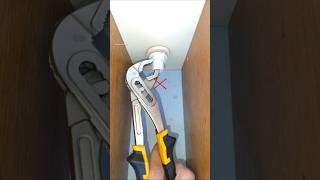
If your Toronto home was built before the mid‑1950s, the pipe that brings drinking water from the street into your basement may still be lead. That is not a horror story; it is the boring reality of a city that grew faster than the infrastructure standards. The Health Canada guideline for lead in drinking water dropped from 10 µg/L to 5 µg/L in 2019, the City of Toronto runs a free testing program and a Priority replacement program for the public side of the line, and homeowner‑side replacement in 2026 is straightforward enough to plan around.
This is the spring 2026 GTA homeowner guide for what lead service lines actually are, how to confirm whether you have one, what the city does for you for free, what you pay for, and what the install actually looks like.
Why pre‑1955 GTA homes still have lead water service lines
The water service line is the small underground pipe that runs from the city water main in the street, under your front yard, and into your basement to the meter. Toronto used lead for these private‑side service lines well into the early 1950s. The metal is soft, easy to bend around obstructions, and joints are simple to seal — for a 19th‑ and early‑20th‑century plumber that is exactly what you want. The risk only became codified late, and replacement only became routine even later.
The city stopped installing lead in new builds long ago, but the inventory in the ground does not change just because the spec changed. Roughly speaking: if your home was built before about 1955, there is a real chance the line is lead. Late‑1950s and 1960s builds are usually copper, which is what you want. Anything built from the 1970s on is essentially never lead.
A few practical points that homeowners get wrong:
- Lead is the service line — the small horizontal pipe under the lawn — not the interior plumbing tree. Interior soldering with lead solder did happen on copper pipe in homes through 1986, but the dominant lead exposure path in a pre‑1955 home is the service line itself, because it is the longest contact path with sitting water.
- The City of Toronto distinguishes private side (your property line to your basement) from public side (city main to your property line). Both can be lead and they replace independently.
- Galvanized steel pipe, very common in the 1950s‑70s, is not lead, but galvanized that has been downstream of an upstream lead service for decades absorbs lead into its scale and continues to leach long after the lead line is gone. If your testing comes back high and you replace just the service line, retesting after replacement is the only way to confirm the upstream contamination cleared.
How to tell if your home has lead pipes (the 60‑second basement check)
The pipe enters your basement at the water meter. Find the meter, then look at the pipe upstream of it — the side closer to the front wall.
- Colour: lead is dull silver‑grey, not the warm copper colour and not the bright galvanized silver of a more recent install.
- Scratch test: scratch the surface lightly with a key. Lead scratches very easily and exposes a shiny silver streak. Copper scratches to copper, and galvanized scratches to a duller silver and resists.
- Sound test: tap the pipe with a coin or screwdriver shank. Lead sounds dull and dead. Copper rings. Galvanized rings, but flatter.
- Magnet test: a fridge magnet will not stick to lead or to copper. It will stick to galvanized steel. Useful for ruling galvanized in or out.
The most reliable signal is a licensed plumber, especially in a finished basement where the inbound pipe is sleeved or boxed in. The City of Toronto will also check its records — you can call 311 and submit a service request to have staff look up whether the public side at your address is recorded as lead. The records search can take up to 30 business days but it costs nothing and it tells you whether the city has any liability on the public side.
The free Toronto lead water test (and the Health Canada threshold that changed in 2019)
If you live in a Toronto home built before the mid‑1950s, the city will mail you a lead testing kit for free. You request it through 311. You take a sample using the protocol they include — typically a stagnant first‑draw sample after the water has sat in the line for at least six hours, which is the worst‑case profile and the protocol Toronto Public Health uses for risk assessment. Results come back from the Toronto Water laboratory within about 30 days, by email or mail.
The threshold the city tests against is the Health Canada Maximum Acceptable Concentration of 5 µg/L for total lead, lowered from 10 µg/L in March 2019. The 2019 change was driven by updated science showing no safe threshold for lead exposure in children — every detection above non‑detect is a real number, and the standard is now to keep concentrations as low as reasonably achievable.
Two practical things to know:
- A first‑draw sample after long stagnation will read higher than a flushed sample. This is intentional — it represents the water you actually drink at the start of the day, after the line has sat overnight, and it is the right sample for risk assessment.
- A reading at or below 5 µg/L on a worst‑case sample does not prove there is no lead in the line. It proves that under that protocol the water is below the guideline. Lead leaching is variable with temperature, water chemistry, and stagnation time. A clean test is reassuring; a positive test is decisive.
If you want to test independently, accredited Ontario laboratories will test a tap sample for $35–$50. The Government of Ontario maintains a list of accredited labs and the city will accept reasoned third‑party results.
The Priority Lead Water Service Replacement Program — what it actually is
The single most useful thing for a Toronto homeowner with a confirmed lead service line is the Priority Lead Water Service Replacement Program (PLWSRP). The deal is simple. If you commit to replacing the private side of the line, the city will replace the public side at no cost to you, on a priority basis ahead of the city’s normal capital‑plan replacement queue.
The mechanics:
- Eligible properties: all properties with a lead public‑side service except multi‑residential buildings.
- Two pathways:
- (a) City contractor coordinates both sides: you contact the city’s selected contractor and arrange a single mobilization that replaces the city’s portion and yours at the same time. This is the cleanest and minimizes excavation footprint.
- (b) You hire your own contractor first: you complete the private side, then apply for the city to come do its side after. This works when you have a plumber you trust or a private quote that beats the city‑contractor pricing.
- Application processing: roughly two weeks.
- City‑side replacement post‑approval: the city aims to complete its public‑side work within about 12 weeks.
- Free faucet filter while you wait: if the city‑side is confirmed lead, the city mails you a NSF/ANSI‑53 certified faucet filter for lead removal so you can drink the tap immediately while you organize the replacement.
The thing nobody emphasizes about PLWSRP: the program is the reason you replace the private side in the first place. Replacing only your side and leaving the city‑side lead is not a fix — water still flows through a lead public segment before it reaches your now‑clean private segment, and lead concentrations in the line will not drop the way they should. The whole‑line replacement is the only result that actually clears the lead from your drinking water.
What the city pays for vs. what you pay for
This is the boundary that confuses every first‑time applicant.
- City pays: the public‑side service line from the water main in the street to the property line. The city‑side replacement is in 3/4‑inch copper and includes the connection to the main, restoration of the road or sidewalk, and the connection at the property line. It is genuinely free.
- Homeowner pays: the private‑side service line from the property line to the inside of your basement. The connection to the inside meter is yours. Restoration of your front lawn, walkway, or any landscaping disturbed in your yard is yours. If trenchless can be used and you can keep the porch, that is on the contractor’s pre‑dig assessment.
A few cost lines that are not always obvious in the pre‑sales call:
- The shutoff valve replacement at the meter side is usually included in a private‑side quote, but confirm. An old line often comes with an old valve that fails on the day you need it most.
- Permit fees for the private side are normally rolled into the contractor’s quote in Toronto. If your contractor itemizes them separately, ask why.
- Restoration of front walkway concrete, decorative interlock, or a treated front lawn is the line that quietly inflates a quote. Some contractors include “back to grade” only and leave you with sod and rough fill.
Real GTA spring 2026 private‑side replacement costs
GTA market consensus across multiple Toronto plumbers in early 2026 puts the private‑side band at:
- Short, accessible runs (typical mid‑block 1920s–1950s lots, 25–35 ft from property line to meter, trenchless‑viable): $1,500–$3,000 all‑in for a straightforward replacement in 3/4‑inch copper.
- Standard urban Toronto lot (40 ft, with a porch or front stairs to work around, may need one or two access pits): $3,200–$5,000.
- Long or obstructed runs (corner lots, deep front yards, mature trees, decorative front walkways that have to be saved or restored, multi‑zone routing): $5,000–$10,000.
- Very old Victorians or homes with heavy front‑porch obligations (concrete porch slab to preserve, side‑of‑house service, or full open‑trench is the only viable method): often $8,000–$12,000 because of restoration.
These bands match the public 2025–2026 cost guides from Anta Plumbing, Mister Plumber, Water Guard, Master Drain, AquaRescue, and Canadian Rooter — the GTA‑specific contractors that publish working costs. The line that drives the spread is not the pipe; it is the access and restoration. A 1‑metre‑deep service line in a flat unpaved front yard with no porch is a half‑day job. The same line under a 1908 stone porch with mature roots is a multi‑day job with a small excavator and stone reset.
For the GTA‑specific plumbing context the LF Builders forum has a 2026 plumbing renovation guide that walks the broader cost picture for pipes, water heaters, and fixtures alongside the lead service work. For homes where a lead service is one of several era issues, the pre‑1980 plumbing era guide covers what else to plan to do at the same time so that the front‑yard dig pays off across more than just the service line.
Trenchless vs open‑trench: which one your front yard gets
The replacement method depends on access and obstructions, not preference.
Trenchless (“torpedo” or pneumatic mole) replacement uses two small access pits — one at the property line, one at the basement entry — and pulls a new copper line through the existing path. The old lead line is sacrificed in place. Trenchless preserves your front lawn, walkway, and any decorative interlock. It needs:
- Roughly 5 ft of clearance between front stairs and the property line for the entry pit.
- A reasonably straight line from property to basement entry. A line that dog‑legs around a porch column or a tree is generally not trenchless‑viable for the curved segment.
- Soil that takes the pneumatic head. Heavy stone or buried construction debris stops the head and forces a switch to open trench partway through.
Open‑trench replacement is the older method — dig a continuous trench from property line to basement, remove the lead line, lay copper, backfill, and restore. Open trench is faster on a clear front yard but it tears up everything in the trench path. The cost difference is mostly restoration: an open trench through plain sod is cheaper to fix than the same length through interlock or a flagstone walkway.
The 2026 GTA market trend: most contractors quote trenchless first if the geometry allows, because porch‑saving and walkway‑saving are the value proposition that justifies the higher pipe‑labour rate per linear foot. Trenchless typically prices at a meaningful premium per foot vs open trench; the cost picture only flips when restoration of a finished walkway or porch is in the open‑trench scope, at which point trenchless becomes the cheaper total job.
What to do while you wait (filter, flush, formula‑feeding kids)
Lead is most dangerous to children under six and to pregnant people. While the replacement is being scheduled, three measures cut exposure substantially:
- Run the cold tap first until the water turns noticeably colder, typically 30 seconds to 2 minutes after stagnation. The first‑draw water has sat in contact with the lead longest. Discard that, then collect drinking and cooking water from the colder running stream.
- Use a NSF/ANSI‑53 certified filter for lead removal. This is the same standard the city‑mailed filter meets if your public side is confirmed lead. Pitcher filters and faucet filters are both acceptable as long as they carry the NSF/ANSI‑53 lead certification — many basic carbon filters do not.
- Use bottled or filtered water for infant formula. The Health Canada guidance is explicit: prepared infant formula represents a much larger fraction of an infant’s daily lead intake than for an older child or adult, so the precaution is worth it for the months between confirmation and replacement.
Hot water from the tap should never be used for drinking, cooking, or formula in a confirmed‑lead home. Hot water leaches lead more aggressively than cold and the difference can be a factor of two or three in the same plumbing.
Bottom line
For a Toronto homeowner who confirms the service line is lead, the order of operations is fixed. Test free through 311. Request a city records check for the public side. If both sides are lead, apply to PLWSRP and decide between coordinating with the city contractor or using your own. Get two or three independent quotes for the private side — restoration line items are where the spread lives. Use a NSF‑53 filter and flush protocol while you wait, particularly if children or someone pregnant is in the home. Replace both sides together if the geometry allows it; replacing only one side is not the result you actually want.
Spring 2026 is a reasonable window for this work. The ground is workable from late April through November in most of the GTA, contractors have spring‑rush availability through early June, and the 12‑week city‑side window from PLWSRP approval lines up with summer mobilization on the public side. Booking the private side for a Tuesday‑Wednesday window minimizes weekend water‑off impact, and the basement‑side connection back to your meter is usually a half‑day reconnection after the trench is closed.
If you have done a Toronto LSL replacement recently — particularly if you went through PLWSRP and have a sense of what the city contractor charged versus what an independent contractor charged — share the line length, the lot type, the method, and the all‑in cost. Photos of the inbound pipe at the meter (the silver‑grey colour, the scratch streak, the connection at the meter) help other homeowners self‑diagnose.
Track $RENO earnings on this topic — top contributors at the homeowner‑and‑trades intersection are tier‑up candidates. New here? See the Welcome to $RENO — Quests, Rewards, Leaderboard topic for how the forum currency works, and link a Solana wallet on signup so you can claim your earnings when on‑chain settlement opens. For broader context on heritage‑home renovation challenges, the GTA Heritage and Century Home Renovation Challenges 2026 thread is a useful companion read for the kind of pre‑1955 home that most often carries lead service lines, and the GTA Sump Pump Battery Backup Spring 2026 guide covers another quietly skipped basement‑side plumbing retrofit that pre‑1980 GTA homes most often need at the same time.
More from LF Builders & home.renovation.reviews
LF Builders has served the Greater Toronto Area for over 50 years with more than 30,000 completed renovation and construction projects. From interlock and flagstone to full kitchen and bathroom renovations, waterproofing, and aluminum work — explore services and request a quote at lfbuilders.ca.
Samm Simon’s 251 KM Challenge for Cancer Research — LF Builders is proud to support Samm Simon’s 251 km charity run raising funds for cancer research. Follow the journey and donate at sammsimon.ca.
Further reading on the LF Builders blog: Eavestrough and Gutter Guard Cost Guide 2026: GTA Homeowner Edition — practical detail that pairs well with the topic above.