If you’re getting quotes for a roof replacement in Ontario right now, expect a 25–35% spread between the lowest and highest bids on the same house. The difference usually isn’t material quality. It’s what’s included — or left out.
The two-layer rule and why it matters
Ontario’s Building Code doesn’t set a province-wide limit on shingle layers, but most GTA municipalities require a full strip-off once two layers are already on the roof, and it’s not arbitrary.
Weight is part of it. Two layers of architectural shingles plus roofing felt run roughly 5–6 lbs per square foot. Most residential trusses are designed for 15–25 lbs per square foot total load. A heavy snow year on an already loaded deck eats through that margin fast.
The bigger issue for most homeowners is warranty. IKO, GAF, and BP all void shingle warranty when installed over more than one existing layer. If your house already has two layers, a contractor adding a third is installing an unwarranted product, regardless of how new the shingles look.
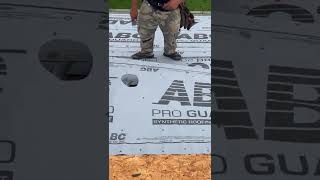
The third problem is membrane access. Two layers on the roof means the ice and water shield at the eaves and valleys stays buried. On a 20+ year Ontario house, that membrane is usually where failure starts, not the shingles above it.
If a contractor quotes a re-roof over existing shingles without confirming how many layers are up there, that’s the first question to ask.
When you need a permit
Like-for-like shingle replacement on a sloped residential roof doesn’t require a permit in Ontario. Changing roofline geometry does — dormers, slope changes, footprint expansion. Switching from sloped to flat or low-slope does. Widespread structural deck replacement does too: if the strip-off reveals rot requiring more than 20–25% of deck boards replaced, most GTA municipalities treat that as a structural repair requiring permit review.
Budget $300–$600 if a permit applies. The contractor should pull and manage it, not hand that task back to you as a separate line item.
What the deck inspection turns up
The strip-off is when you find out what’s been under there. On a 20-year-old Ontario house, replacing 5–15% of the deck is normal. The spots are usually the same: along the eaves where ice dams have cycled, at valleys, around pipe penetrations and chimney bases, and wherever an old repair was done with mismatched flashing.
A quote should include a deck inspection line and a per-sheet rate for replacement — currently $65–$90 per 4×8 sheet of OSB installed in the GTA. If the quote says nothing about deck replacement, ask: “What’s the per-sheet rate if we find rot, and how does that get billed?” A contractor who answers that without hesitating has dealt with this before.
Ice and water shield
In Climate Zone 5 and above — which is all of the GTA and most of Ontario — minimum ice and water shield coverage is 900mm measured up from the interior face of the exterior wall. On a standard pitch, that’s roughly two to three shingle courses from the eave.
Valleys need full coverage end to end, not just a center strip. Around chimneys, skylights, and plumbing penetrations, self-adhering membrane wraps the penetration before any metal flashing goes on.
A quote that says “underlayment” without specifying self-adhering SBS membrane at eaves, valleys, and penetrations may be pricing felt at those locations. In Ontario’s climate, that’s where leaks develop.
Ventilation
Balanced attic ventilation is the piece most often missing from a roofing scope. The standard is 1:150 NFA: one square foot of net free area per 150 square feet of attic floor, split evenly between soffit intake and ridge exhaust.
Ridge vent without open soffit intake is worse than no ridge vent at all. It creates a negative pressure path that pulls cold air through ceiling penetrations instead of through the soffit. Before or after the job, ask: “What’s the NFA calculation for this attic, and how are you confirming the soffit vents are clear?”
If the roofing scope touches the eaves, soffit and fascia condition is worth checking beforehand. This piece on aluminum soffit and fascia replacement in Ontario covers what to look for.
What a complete scope covers
On the quote itself, look for: strip-off and disposal with the number of existing layers confirmed before pricing; deck inspection with a per-sheet replacement rate stated; ice and water shield at eaves, valleys, and penetrations called out by footage, not just the word “underlayment”; drip edge replacement on all rakes and eaves; pipe boot and penetration flashing replacement; ridge vent spec with linear footage and NFA rating; shingle brand, line, and warranty term in writing; manufacturer warranty registration filed by the contractor after installation.
Anything not listed is either excluded or assumed. Get it in writing before the job starts.
Questions about scope, materials, or a quote you want a second read on — post below. Top contributors earn $RENO, a Solana token paid out for helpful answers. How the rewards work.