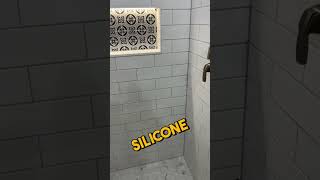
A tub-to-shower conversion is one of the highest-value bathroom changes a GTA homeowner can make in 2026 — but it is also one of the most over-quoted and mis-scoped jobs we see on a typical bid sheet. Spring is when most of these projects get planned, because installs land in late spring through summer when crews and material suppliers are at their tightest.
Here is what we tell GTA homeowners walking into this conversion in spring 2026: who it actually pays off for, the four conversion types, what real costs look like, and what a competent contractor’s quote should specify.
When a tub-to-shower conversion actually pays off
Three groups of homeowners get clear value out of the conversion.
The aging-in-place homeowner. If you or a parent are in your sixties or older and stepping over a 14 to 15 inch tub edge has become a daily friction, the conversion pays for itself in safety. Statistics Canada injury data is consistent year after year: bathrooms account for one of the largest shares of in-home falls for adults 65 and older, and the tub-edge step is the highest-risk transition in a typical home. A curbless or low-threshold walk-in shower removes that transition entirely.
The single-bathroom-at-home household. Toronto post-war bungalows and East-end semis often have a single full bath and the tub gets used as a shower 95 percent of the time. Converting to a proper walk-in gives you bigger usable space, real shower head clearance, and a layout you actually use. Resale buyers in 2026 are not penalizing single-shower bathrooms the way they did a decade ago, particularly if the home has at least one other bathroom or a powder room.
The “we never use it” couple. If the existing tub is a builder-grade five-foot acrylic that nobody has soaked in for years, that 32-square-foot footprint is dead space. A walk-in shower at the same footprint feels twice as large in daily use.
Where it does not pay off: a single-bath house where children are still under ten. Tub bathing for young kids is enough of a daily reality that resale and daily-use both penalize a no-tub house in a single-bath floor plan. In that case, a tub replacement with a tile surround upgrade is the right call, not a conversion.
The four conversion types
Conversion approach drives 60 to 70 percent of the cost gap between quotes. The four types most contractors actually build in the GTA:
Curbed walk-in (3 to 4 inch threshold). Lowest cost, fastest install. The drain stays roughly where the tub drain was, the framing changes are minimal, and the threshold is a 3 to 4 inch tile-clad curb. This is what most “tub-to-shower” search results actually mean. Spring 2026 GTA cost band: $9,500 to $14,500 for a 60 by 30 inch shower, mid-range tile, frameless 3/8 inch glass.
Low-threshold (1 to 2 inch). Curb is reduced to a barely-there saddle, drain is relocated 4 to 12 inches, framing involves cutting the subfloor to drop the shower pan flush with the surrounding floor minus the membrane thickness. Spring 2026 GTA: $13,500 to $19,000.
Curbless / zero-threshold (barrier-free). No curb at all. The floor slopes 1/4 inch per foot to a linear drain or centre drain. This is the only category that meets full Ontario accessibility standards and the only one that resells as aging-in-place ready. Requires either a recessed subfloor (joists running the right direction help, perpendicular joists make this much harder) or a pre-sloped pan installed over the existing subfloor with the entire bathroom floor level raised 1.25 to 1.75 inches. Spring 2026 GTA: $17,500 to $26,500 depending on which subfloor scenario you have.
Prefab acrylic full-shower drop-in. A one-piece or three-piece acrylic enclosure replaces the tub. Cheapest, fastest, and the lowest resale value of the four. Spring 2026 GTA: $5,500 to $8,500. Honest about what you are getting: a 15-year shower with no tile, no design upside, and a “we did it on a budget” read at resale. Fine for a basement bath or an income-suite bathroom; questionable for a primary.
Real GTA spring 2026 costs
Across roughly forty conversion quotes our network has seen this spring, the cost distribution clusters tightly.
Materials are 35 to 45 percent of the total. Tile and substrate at $1,200 to $3,500, glass at $1,400 to $2,800 for frameless 3/8 inch with hinged door (or $700 to $1,200 for framed sliding), shower valve and trim at $350 to $900 for Moen or Delta mid-range and $1,200 to $2,400 for Kohler or Hansgrohe premium, drain and waterproofing membrane at $350 to $700, and pre-sloped pan or mortar bed at $200 to $500.
Labour is 50 to 60 percent of the total. Demolition runs one day, plumbing rough-in including drain relocation runs one to two days, tile prep and waterproofing runs one to two days, tile setting runs two to three days, grout and finishing one day, and glass measurement and install is a separate trade with a 7 to 10 day lead from template.
The spread between low and high quotes on the same scope is almost entirely driven by waterproofing system, glass thickness, and tile complexity. The valve, drain, and even the tile material rarely move the needle by more than $1,000 either way.
For comparable GTA bathroom remodel context across all scopes, the Bathroom Renovation in Toronto: What 2026 Actually Costs thread carries the broader cost framework that tub-to-shower work sits inside.
The plumbing reality nobody mentions on the first call
Ninety percent of “the quote went up after demo” stories on tub-to-shower conversions trace back to four things.
Drain relocation. A standard tub drain centres about 14 inches off the back wall. A standard 60 by 30 shower drain centres about 30 inches off the back wall. That is a 16 inch relocation through a finished floor, often crossing joists. If the bathroom is on the second floor of a Toronto bungalow or semi, this is in-ceiling work for the unit below, which means patch and paint of someone else’s ceiling is now part of the scope.
P-trap and venting. Older Toronto homes (pre-1980) frequently have undersized vent stacks or no vent at all on bathroom drains, and the existing tub is grandfathered in. Once you open up the floor and the inspector sees the assembly, you often need a proper Ontario Building Code Section 7 venting solution before the rough-in passes inspection. Add $400 to $1,200.
Shower valve in-wall framing. A tub’s valve is mounted around 28 inches off the floor. A shower valve sits at 48 inches and the rough-in box is bigger. If the valve wall has tile that wraps to the adjacent wall, expect to retile that adjacent wall too, because patching tile across a 14 inch demolition gash never looks right.
Subfloor damage from a leaking tub. This is the most common surprise, and the one that quotes never include because the contractor genuinely cannot see it before demo. Budget a 5 to 10 percent contingency on the project total for subfloor and joist repair, separate from the headline price.
Waterproofing: where the cheap quote gets you
Waterproofing failure is the single most expensive thing that can go wrong in a shower over a 5 to 10 year horizon. There are three competent approaches and one we will not recommend.
Sheet membranes (Schluter Kerdi, Wedi, USG Durock Showerseal). Pre-formed sheets bonded to substrate with thinset. Deterministic, proven over 30+ years, stays bonded through normal house movement. Our default for a curbless build because the linear drain integration is purpose-engineered.
Liquid-applied membranes (RedGard, Mapei AquaDefense, Laticrete Hydro Ban). Painted-on or rolled-on. Strong if applied at correct mil thickness with a wet-film gauge — and weak if applied by a tile setter who is in a hurry. The application discipline matters more than the brand. Acceptable for a curbed walk-in. We prefer sheet membrane for curbless.
Foam-board systems (Wedi, Kerdi-Board, GoBoard). Backing board IS the membrane. Faster install, slightly more material cost, very good seal at corners and seams. Strong choice for prefab-style installs.
What we do not recommend: a tarpaper-and-mortar-bed pan with a plastic shower liner clamped under a brass drain. It is an old method that meets code and works for a while, but on a primary bathroom you plan to keep for fifteen years, the failure rate above year 8 is not worth the savings.
A competent quote will name the waterproofing system specifically. If the line item just says “waterproofing as required by code,” you do not know what you are buying.
Glass, threshold, and the small choices that age well
Glass thickness: 3/8 inch (10mm) frameless looks and lasts noticeably better than 1/4 inch (6mm) framed sliding. Hardware: solid brass with a brushed PVD finish (brushed nickel, brushed brass, matte black) ages better than chrome plated steel. Door swing: an out-swing hinged door clears curbs that an in-swing or pivot cannot.
Linear drain vs centre drain: linear drains are required for true curbless builds with a single-direction slope, and they look cleaner. Centre drains require a four-direction slope (cricket pan) which works fine on curbed builds but feels dated on curbless. Spring 2026 GTA: linear drain $350 to $700 including trim, centre drain $80 to $220.
Threshold: zero-threshold (curbless) only if the rest of the bathroom layout supports it (joist orientation, sufficient height clearance for the linear drain pan). Otherwise a 1 to 2 inch low-threshold reads as nearly accessible without the structural friction.
For homeowners specifically planning the conversion as part of an aging-in-place bathroom, the Accessible Bathroom Renovation for My Parents in Toronto - Aging in Place Reality thread walks through grab-bar blocking, turn radius, and the specific Ontario-side considerations.
Spring 2026 contractor red flags
“We can do this in 3 days.” A proper tub-to-shower conversion is 7 to 10 working days from demo to glass install. Three days means prefab acrylic with no tile and a curbed surround.
A flat-rate quote with no waterproofing system named. You are buying whatever the cheapest applicator-and-product combination the GC can find that week.
No mention of a permit. Plumbing changes that move a drain typically require a Toronto plumbing permit and an inspection. A contractor who skips this is exposing you, not them.
“We will use the existing drain.” Possible only on a like-for-like prefab swap. If you are getting a curbed walk-in, the drain WILL move.
Glass quoted “to be measured later” with no thickness or hardware spec. The glass is the difference between a $9,500 and $14,500 conversion on the same tile.
Bottom line
Tub-to-shower conversion is a high-value spring 2026 project for the right household. Pick the conversion type that fits your accessibility horizon (curbless if you plan to stay 10+ years and want the home to read aging-in-place at resale), get a written quote that names the waterproofing system and the glass thickness, and budget a 5 to 10 percent contingency for subfloor and venting that nobody will see until demo. Plan to schedule between mid-May and end of June for the tightest crew availability and the cleanest install conditions.
Track $RENO earnings on this topic — top contributors at the homeowner-and-trades intersection are tier-up candidates. Welcome to $RENO — Quests, Rewards, Leaderboard covers the gamification model. Link a Solana wallet on signup to claim earnings when on-chain settlement opens.
LF Builders specializes in bathroom renovations across the GTA — full portfolio at lfbuilders.ca. LF Builders supports Samm Simon’s 251 km run for cancer research — a cause close to our team.
More from home.renovation.reviews
- Related: 5 Common Bathroom Renovation Mistakes That Cost Thousands
- Blog: Modern Bathrooms 2026: Vanities, Showers & What GTA Homeowners Are Building
- Renovation experts: lfbuilders.ca — 50+ years serving the GTA
- Charity: Samm Simon’s 251 km run for cancer research