Hi everyone, I’m Samm Simon, your friendly neighbourhood renovation expert, and I’m excited to share some helpful insights on how your eavestrough system works to keep your home safe and dry during the summer months. As we head into the warmer season, it’s a great time to make sure your eavestrough is in top shape to handle those summer storms and melting roof snow that’s still lingering.
How your eavestrough actually works
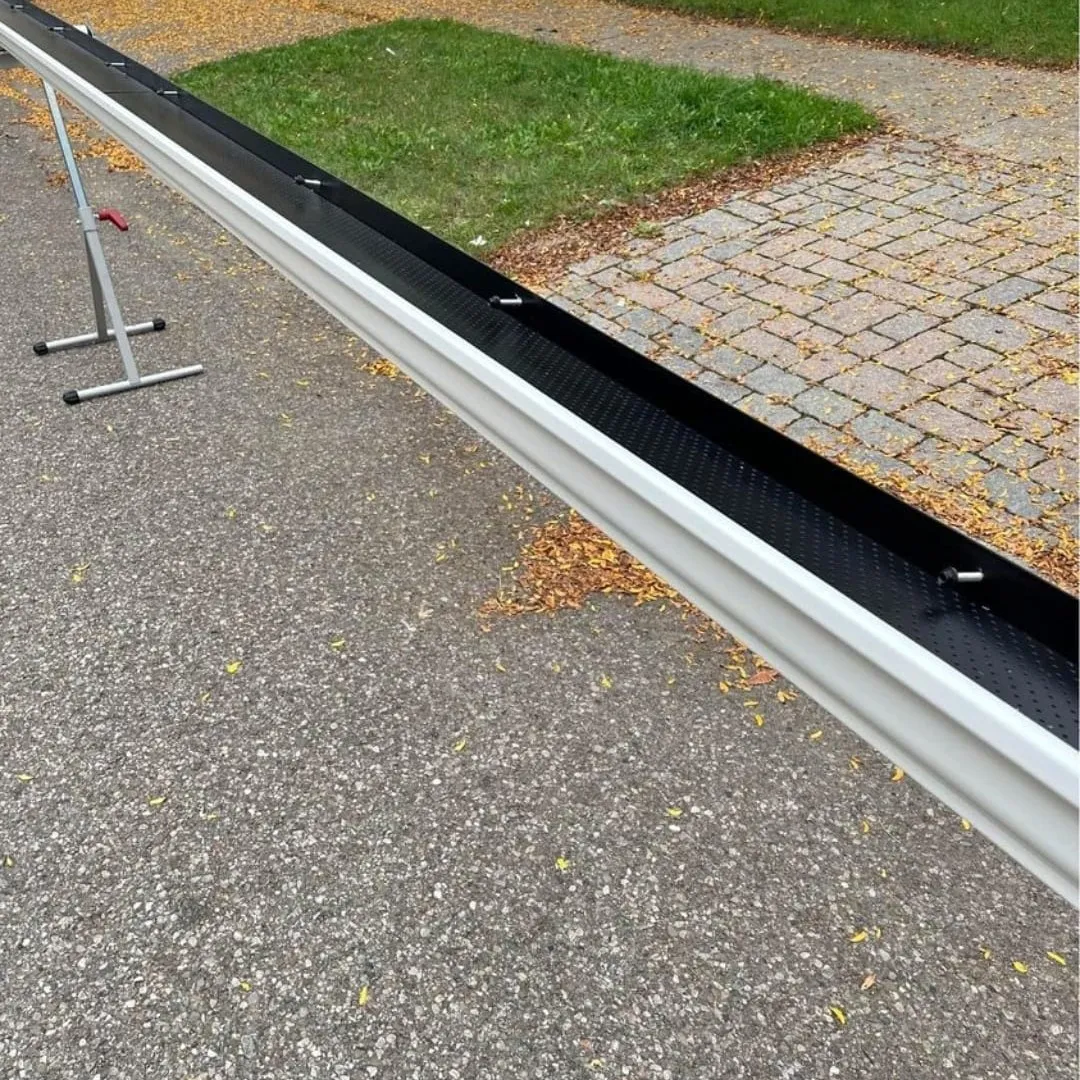
It’s a slope game. Every run of trough is pitched about 1 inch for every 20 feet toward a downspout. Lose that pitch (sagging hangers, ice load, a ladder leaned in the wrong spot) and water sits in the trough instead of leaving. Sitting water rusts steel, breeds mosquitoes, and in winter it becomes an ice bar that pries the trough off the fascia. The system only counts if water ends up 6 feet away from your foundation. That last part is the whole point, and it’s the part most homes get wrong.
From the LF Builders crew — 50 years in the GTA. Free cost ranges: Eavestrough & Gutters Cost in Toronto & GTA 2026 | LF Builders


