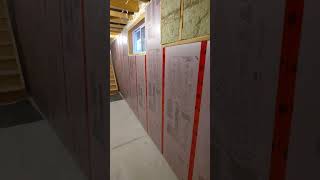
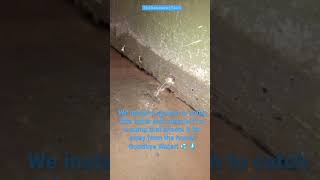
Spring is the busiest season for one of the most stressful calls we get: “There’s water in my basement.” The combination of snowmelt, April rains, and ground that is still thawing underneath makes this a predictable problem across the GTA. But what surprises a lot of homeowners is that the first step has nothing to do with calling a contractor - it is about figuring out exactly what kind of water problem you actually have.
After 50-plus years doing waterproofing and foundation work in Toronto and the surrounding area, I have seen homeowners spend tens of thousands on the wrong fix because they (or the first contractor they called) misidentified the source. This post is a framework for thinking through what you are dealing with before you spend a dollar.
Step 1 - Identify Where the Water Is Coming From
There are four distinct sources and they call for completely different solutions:
Window wells and grade drainage. If water is pooling against your foundation wall and running in through basement windows or the junction where the wall meets the floor, the problem may be as simple as regrading the soil around the house so it slopes away. A functional window well with proper aggregate at the base helps too. This is often a low-cost fix.
Foundation wall cracks. Hairline vertical cracks in poured concrete are common and usually benign - they develop as the concrete cures. Horizontal cracks or stair-step cracks in block foundations are more serious because they indicate lateral pressure from soil. Water coming in through a visible crack is different from water seeping up through the floor or appearing at the wall-floor joint.
Interior seepage (hydrostatic pressure). When water appears at the base of the wall or across the floor, it is usually groundwater migrating through the concrete under pressure. Interior drain tile systems manage this - they do not stop the water from entering the structure, but they channel it to a sump pit before it gets to your floor. This is the most common fix for GTA homes with older block or poured foundations.
Exterior membrane failure. The original waterproofing membrane applied to the exterior of the foundation wall breaks down over time. Excavating to the footing and applying a new membrane with drainage board is the most comprehensive repair, and the most expensive - typically $15,000 to $30,000 for a detached home in Toronto. It is not always necessary.
Step 2 - Know What “Waterproofing” Actually Means
This word gets used loosely. Interior drain tile plus a sump pump is waterproofing in common usage, but it is really water management - you are not stopping water from entering, you are just redirecting it. Exterior excavation with a new membrane is true waterproofing. Both have legitimate uses depending on your foundation type, the severity of the issue, and your budget.
Worth knowing: the City of Toronto’s Basement Flooding Protection Subsidy offers up to $6,650 toward eligible improvements including backwater valves, sump pumps, and window wells. We covered the details in Toronto’s Basement Flooding Subsidy: Up to $6,650 in 2026. Worth reading before you commit to anything.
Step 3 - Get at Least Two Opinions
The waterproofing industry in Ontario has had its share of aggressive sales tactics. If the first contractor you call recommends full exterior excavation without explaining why an interior system would not work, get a second opinion. Ask specifically: what is causing the water to enter, not just how they plan to stop it.
The same principle applies above grade - we touched on vetting contractors in What to Ask Your Contractor Before Signing a Reno Contract. The stakes underground are just as high.
What We Have Seen This Spring
The most common calls this April: homes built in the 1960s and 70s in Etobicoke, North York, and Scarborough where the original tar-and-fibre membrane has completely degraded. Homes backing onto ravines are seeing more seepage than usual after a wet March. And window well drainage is failing on a surprising number of newer builds, suggesting the stone fill was undersized at install.
If you are dealing with a wet basement right now - where is the water appearing? Floor, walls, corner, window well? That detail changes the diagnosis significantly. Post below and I am happy to give you a read on what it might be.
LF Builders - serving Toronto and the GTA for 50+ years
More from home.renovation.reviews
- Renovation services: lfbuilders.ca — 50+ years building across the GTA, 30,000+ completed projects.
- Renovation blog: blog.lfbuilders.ca — cost guides, contractor tips, and GTA renovation advice.
- Community spotlight: Samm Simon’s 251 km charity run — raising funds for cancer research on May 11, 2026. All support welcome.
- Related reading: home.renovation.reviews/c/canada/ontario — Ontario renovation discussions.