Most GTA homeowners converting their basement to a rental unit underestimate the project by a wide margin. The quotes they get online say $50,000–$80,000. What they find out mid-project is that those numbers assume an already-tall basement, an existing separate entrance, and a panel that can handle the added load. Strip those assumptions out and the real cost for a fully legal suite in Toronto typically lands between $80,000 and $140,000 for an 800–1,000 sq ft space.
That gap matters for budgeting, but the bigger problem is what a non-compliant suite does at resale, with insurance, and when the city gets involved.
The ceiling height problem most contractors don’t flag upfront
The 2024 Ontario Building Code sets a minimum ceiling height of 1.95 metres (about 6’5") throughout all habitable rooms in a secondary suite. Under beams, ducts, and other obstructions, that drops to 1.85 metres (about 6’1").
Older GTA homes built before the 1980s frequently have basement ceiling heights of 7 feet or less to the joists, with ducts and pipes eating into that further. If your existing slab-to-joist height is under 2.1 metres, you’re likely looking at underpinning.
Underpinning adds $30,000–$80,000 before any finishing begins. It’s the single biggest variable in basement conversion budgets and the one most homeowners learn about after signing a contract.
What inspectors check
A separate entrance is mandatory. Side door, rear walkout, or direct exterior stairwell all qualify. A shared entrance through the main unit does not. If your house doesn’t have one, adding it means cutting through the foundation wall or grading a stairwell. Budget $8,000–$20,000 depending on conditions.
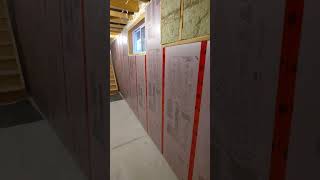
Fire separation comes next. The code requires 30-minute fire-rated walls between units and a 45-minute rated floor/ceiling assembly. Any connecting door must be solid core, 45-minute rated, and self-closing. Existing interior framing almost never meets this without new drywall.
Each bedroom needs at least one egress window: minimum 380mm high by 450mm wide, 0.35 sqm net clear opening. In older homes, this usually means cutting new openings into the foundation wall. Expect $800–$1,500 per window, plus the exterior well.
The City of Toronto also requires secondary suites to be registered. The building permit application starts that process, with fees running $500–$2,000 depending on scope. After the permit, an ESA electrical inspection is separate. Professional drawings typically cost $2,000–$5,000.
The electrical upgrade most quotes miss
An existing 100-amp panel running a full house often can’t support a basement suite’s kitchen, bathroom, laundry, and HVAC load. A panel upgrade to 200 amps runs $2,500–$4,500 installed. Some contractors include this; most don’t itemize it clearly. Ask for it in writing before signing anything.
Rental income and payback math
Legal one-bedroom suites in the GTA rent for $1,200–$2,000 per month depending on neighbourhood, size, and finish level. Two-bedroom suites run $1,400–$2,400.
At $1,600/month net, a $100,000 conversion takes roughly 5.2 years to break even on rent alone, before any resale value increase. Non-registered suites don’t get that same value lift. Buyers’ lawyers flag unregistered units, and lenders sometimes pull financing because of it.
Questions to ask before signing
Every contractor should be able to answer these before you commit:
- What is the current slab-to-joist height, and will any area require underpinning?
- Does the quote include permit drawings and the ESA inspection fee?
- Who is the permit holder and who carries liability if an inspection fails?
- Is a panel upgrade included or excluded?
- What is the deposit structure and what triggers progress payments?
A contractor who has actually done legal basement suites will answer all five without hesitation. Vague answers on underpinning and the permit holder question are the ones to watch.
Have questions about your specific basement layout, or want to share what your own conversion actually cost? Post here. Helpful contributions earn $RENO tokens, tracked on the rewards leaderboard. New to the forum? The welcome topic covers wallet setup and how the rewards system works.