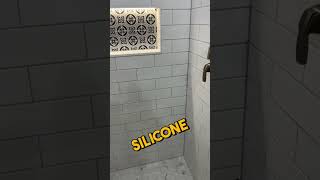
Spring is when most GTA bathroom renovations actually book installs. The tile is going down, the vanity is on order, and the question lands at the worst possible moment: what shower door, what glass, what hardware, and how much should it cost.
The three door styles, framed, semi-frameless, and frameless, span a 3-to-1 price range with very different aesthetics, lifespans, and tile-prep requirements. The Ontario Building Code requires tempered or laminated safety glass in any shower enclosure wider than 150 mm, so the safety glazing itself is non-negotiable. What is negotiable is glass thickness, hardware finish, hinge geometry, and whether the panels are stock or custom-cut to your tile layout.
This is the buyer’s-guide piece I would want before signing a quote. Cost bands are spring 2026 GTA real numbers, the safety-glazing rules are pulled from the Ontario Building Code, and the decision frame is the one a contractor would actually run with you in the bathroom.
Why spring is the right window
Bathroom installs cluster in May and June. Tile setters, glaziers, and plumbers all have backlogs that fill out fast, and shower doors are usually the last item ordered because the opening size has to be measured after the tile is set. A 1-to-3 week glass turnaround on top of a 2-to-4 week trade backlog is normal, so quoting in early spring keeps the project on schedule for summer.
Spring is also when the bathroom-reno cluster comes back to life. If the existing shower is a 1990s framed unit with cloudy glass, mineral-stained tracks, and corroded hinges, the post-winter inspection is a good prompt to decide whether the door gets refinished or replaced. The honest answer is that framed doors with corroded tracks are not really refurbishable, and chasing replacement gaskets on a 25-year-old unit usually costs more than a fresh framed install.
The three door styles
Framed doors are the most common in older GTA bathrooms. The glass is supported by a continuous metal frame on all four sides, which lets the unit use thinner 3/16 or 1/4-inch glass and tolerate larger out-of-plumb openings without leaking. Framed sliding bypass doors are still the workhorse in alcove tub-shower combos and small full-bath retrofits.
Semi-frameless doors have a partial frame, usually around the fixed panel and the perimeter where the glass meets the tile, but no frame on the door panel itself. They use 3/8-inch tempered glass and look closer to frameless than framed. The price gap to a framed unit is small, and the visual upgrade is real, which is why most mid-tier 2026 GTA renovations land here by default.
Frameless doors use no metal framing on the panels at all. The glass is structural, held by clamps or hinges that bolt directly into the tile or studs behind the tile. Most use 3/8-inch tempered glass; 1/2-inch is the standard for taller or wider designs because the heavier glass adds rigidity and reduces deflection. Frameless is the look that magazine bathrooms have used for fifteen years, and on a custom-tiled walk-in shower it is what the design intends. It also costs the most, requires the most precise tile layout, and is the least forgiving when an opening is slightly out of plumb.
OBC safety glazing and glass thickness
The Ontario Building Code is unambiguous on shower glass: any glazing in a shower or bathtub enclosure wider than 150 mm must be safety glass. In practice this means tempered or laminated safety glass conforming to CAN/CGSB-12.1-M, or wired safety glass conforming to CAN/CGSB-12.11-M. Tempered is the standard choice for residential showers because it breaks into small rounded pieces rather than sharp shards if it fails.
Glass thickness is the next decision. Three-eighths-inch is the common frameless standard and the right choice for typical 60 by 76-inch openings. Half-inch is the better call for openings taller than 80 inches, panels wider than 36 inches, or any door that swings rather than slides. The half-inch glass is heavier, feels more solid in hand, and costs roughly 25 to 40 percent more. For framed and semi-frameless installs, 3/16 and 1/4-inch tempered are common because the frame carries the structural load.
A practical note: when a contractor quotes “tempered safety glass” without specifying thickness, ask for the spec on the order. Stamped certification on the corner of the panel is what the building inspector will look for if the install ever gets reviewed.
Pivot, sliding, or neo-angle
Pivot doors swing on a top-and-bottom hinge or on a wall-mounted hinge. They open into the bathroom, which means the floor space outside the shower needs roughly 24 to 30 inches of swing clearance. Pivot is the right pick for walk-in showers with a single fixed wall panel and adequate floor clearance.
Sliding doors run on a top track or a top-and-bottom track. They use no swing clearance, which makes them the right call for tight bathrooms and tub-shower combos. Sliding bypass doors are common in 60-inch alcoves; sliding barn-style doors on a single rail are a 2025-2026 trend that looks good in modern bathrooms but adds $400 to $900 over a comparable bypass.
Neo-angle doors are pentagon-shaped corner shower enclosures, usually with a small pivot door at the cut corner. They were common in 1990s ensuites and are still useful in tight footprints, but they are aesthetically dated and usually not the best aesthetic match for a 2026 renovation. Most current renovations either go alcove with a sliding or hinged door, or skip the corner stall entirely in favour of a walk-in.
Hardware finish and brand tier
Hardware finish is where the per-bathroom budget often jumps without anyone noticing. Chrome and brushed nickel are the inexpensive defaults. Matte black, brushed brass, and champagne bronze are the popular 2026 finishes and add roughly $100 to $400 to a frameless build depending on hinge count and clamp count. Polished brass and gold-tone finishes have come back from the 1980s and now sit at the top of the cost band.
Brand tier matters less than fabrication tier. Most frameless installations in the GTA are custom-cut by a local glass shop; the brand on the hinges is a Dorma, Pinnacle, or Crown line that the shop standardizes on. Stock framed and semi-frameless units from Kohler, MAAX, and DreamLine are common in big-box stores and run a quarter to a third less than custom, with the trade-off that the opening has to fit a stock size.
Two finish details worth pushing on: clear glass versus low-iron clear glass, and standard tempered versus ShowerGuard-style coated glass. Low-iron costs roughly 20 to 30 percent more and removes the slight green tint that thicker glass picks up. Coated glass adds about 15 to 25 percent and reduces water-spot etching from hard GTA water. For half-inch frameless installs, low-iron with a coating is what most premium 2026 jobs spec.
Real GTA cost bands, spring 2026
The spread is wide because the styles are so different.
Framed sliding bypass on a 60-inch alcove, stock unit, chrome or brushed nickel hardware: $400 to $700 for the door, $150 to $350 install. Total $550 to $1,050. This is the budget tier and the right pick for rental properties and basic tub-shower combos.
Framed pivot or hinged door, stock unit, common finish: $500 to $900 door, $200 to $400 install. Total $700 to $1,300.
Semi-frameless sliding or pivot on a stock 60 to 72-inch opening, brushed nickel or matte black: $700 to $1,200 door, $250 to $450 install. Total $950 to $1,650.
Frameless on a stock or near-stock opening, 3/8-inch clear tempered, brushed nickel or matte black: $900 to $1,600 door and panels, $300 to $600 install. Total $1,200 to $2,200.
Custom frameless walk-in, 1/2-inch low-iron tempered, matte black or champagne bronze hardware, neo-angle or 90-degree return panel: $1,800 to $3,200 door and panels, $400 to $700 install. Total $2,200 to $3,900.
ShowerGuard-style coating adds $150 to $400 across all tiers. Demolition and disposal of an existing framed unit adds $100 to $250. Tile repair where old hardware was bolted into the wall adds $200 to $600 if the tile is no longer available and a small accent strip has to be sourced.
DIY versus hiring out
Stock framed and semi-frameless units from a big-box supplier are the realistic DIY range for a homeowner who is comfortable cutting tile, drilling for anchors, and using a level. Plan a Saturday afternoon for a framed bypass and a full Saturday for a semi-frameless pivot. The savings versus a paid install are typically $200 to $500.
Frameless is harder to DIY than it looks. The clamps and hinges bolt into specific anchor points behind the tile, and the panels weigh enough that a single person cannot safely position them. Most GTA glass shops will not warranty leaks or hinge alignment on a customer-installed frameless unit. The $300 to $700 install fee on a frameless build is buying tolerances, lifting help, and a workmanship warranty, and is worth it for almost every renovation.
Custom-cut glass is never DIY. The measurement is a template-and-templating-frame visit by the glass shop after tile is set, which is what the install fee covers. If the quote has the line item, the work is being done correctly.
Five questions to ask before signing
How thick is the glass and is it low-iron or standard clear? The answer should be specific by panel.
Is the glass tempered to CAN/CGSB-12.1-M and stamped accordingly? OBC says yes; the order should confirm.
What is the warranty on the hardware and on workmanship, and are they separate? Hardware is usually 5 to 10 years from the manufacturer; workmanship from the install crew is usually 1 to 5 years.
What is the lead time from final measure to install, and what is the price impact if the tile arrives late? Glass shops typically lock the price for 30 to 60 days from the measure date.
Is this a stock-size opening or a true custom cut? Stock saves money but locks the door size; custom adds 1 to 3 weeks and 25 to 50 percent.
Companion bathroom reading on home.renovation.reviews
GTA Heated Towel Rail Spring 2026: Hardwired vs Plug-In vs Hydronic, OBC GFCI Rules covers the towel-warmer decision that often comes alongside a shower-door upgrade.
GTA Heated Bathroom Floor Spring 2026 covers the in-floor warming layer that makes a frameless walk-in feel finished.
Bathroom Reno Toronto 2026: What GTA Homeowners Should Know is the broader bathroom-reno cost and sequencing umbrella.
$RENO payment ledger is the public record of which posts have earned the community token, useful if you want to see what kind of contribution actually pays out.
The home.renovation.reviews leaderboard shows current top contributors.
Bottom line by use case
Rental property or rough-and-ready ensuite: framed sliding bypass, stock 60-inch, chrome. $550 to $1,050 installed. Replace every 10 to 15 years.
Mid-tier owner-occupied bathroom retrofit: semi-frameless pivot or sliding, brushed nickel or matte black, 3/8-inch tempered. $950 to $1,650 installed. Twenty-year service life with normal cleaning.
Premium walk-in shower, custom tile: frameless, 1/2-inch low-iron tempered, matte black or champagne bronze, custom-cut. $2,200 to $3,900 installed. Should look the same in twenty years.
Tub-shower combo with limited swing clearance: sliding bypass, framed or semi-frameless, stock. $550 to $1,650 installed.
We have been doing GTA bathroom renovation work for more than fifty years, and the right shower door is usually the one whose maintenance pattern matches how the household actually cleans. A frameless half-inch low-iron unit is beautiful in photos and demanding in practice; a semi-frameless pivot in brushed nickel is forgiving and lasts as long as the tile.
Helpful posts in this thread and follow-on bathroom threads earn $RENO on the home.renovation.reviews community-currency leaderboard. New here? Sign up, link a Solana wallet on signup if you want to participate, and tier-up rewards unlock as your post helpfulness compounds.