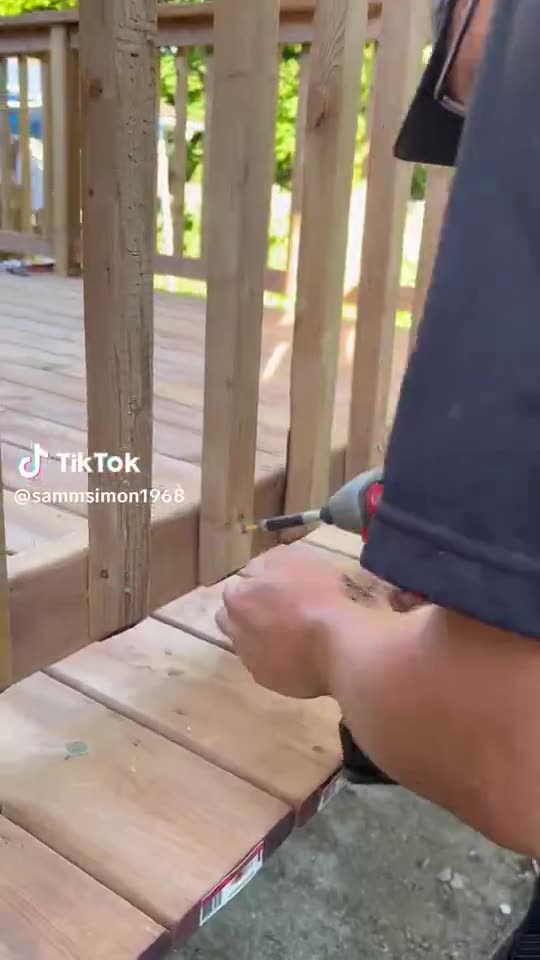
Spring is when the deck quote inbox lights up across the GTA. Composite has become the default ask on most rebuild jobs in Mississauga, Markham, and Oakville, plus the older Etobicoke and North York lots where 1990s pressure-treated decks are starting to come apart. This is a working contractor’s read on what the three volume composite brands actually cost in 2026 Toronto pricing, what the substructure under any of them needs to look like for OBC compliance, and where homeowners are getting burned by quote spreads.
What Toronto and GTA homeowners are actually paying in 2026
Installed composite decking in the GTA is landing at $65 to $95 per square foot for a straightforward ground-floor or single-storey deck with composite boards, pressure-treated substructure, hidden fasteners, and aluminum or composite picket railings. A 12×16 (192 sqft) job comes in around $12,000 to $18,000 depending on brand tier and access. A 16×20 (320 sqft) wraparound on a typical 1980s GTA two-storey is closer to $24,000 to $32,000 once you add a stair run and a privacy screen.
The reason the spread is so wide: substructure complexity (number of footings, beam spans, ledger detail), brand tier, picket spacing on guards, and whether the contractor is quoting with helical piles or sonotubes. A sonotube quote in clay-heavy soil south of Major Mackenzie tends to cost less up front but moves under frost more than helical piles, which adds re-leveling visits over the first three winters.
Trex Enhance vs TimberTech Pro Terrain vs Fiberon Good Life
The three brands occupy slightly different price tiers in the GTA market in 2026.
Trex Enhance Basics is the entry point at roughly $30 to $45 per 16-foot board. Decent capping, four-side scallop profile, lighter weight. Honest mid-warranty product. Heat retention on south-facing decks is real on the dark colours, although the 2026 reformulation on Enhance Naturals has slightly improved this.
Fiberon Good Life sits in the mid range at roughly $45 to $76 per 16-foot board. The capping is denser than Trex Enhance and the scratch resistance is the closest of the three to a higher-priced cellular PVC product at this price point. Colour fade on Fiberon’s grey-tone boards has been more stable in the last two seasons than the equivalent Trex grey.
TimberTech Pro Terrain is the highest of the three at $55 to $99 per 16-foot board. The wood-grain emboss is more convincing in person, the four-side capping is uniform, and the heat reflectivity on the lighter colours is better than Trex Enhance under direct GTA midday sun. AZEK PVC (TimberTech’s parent) sits above Pro Terrain in price and would push you above the $95/sqft installed band.
In practical terms for a GTA homeowner: Fiberon Good Life is usually the best dollar-for-dollar pick. Trex Enhance wins if you want the lowest defensible composite quote. TimberTech Pro Terrain wins if you can spend the extra and want the most durable surface plus the most realistic grain pattern.
Substructure spec — the part nobody talks about in the showroom
This is where good and bad GTA quotes diverge.
Joist spacing. Almost every major composite brand requires 16 inches on centre for straight-board installation, dropping to 12 inches on centre for 45-degree diagonal layouts. If your quote shows 24-inch centres, you have either a wood-deck quote priced as composite or a quote that will fail the manufacturer warranty when the deck flexes underfoot in two summers.
Joist material and span. Pressure-treated SPF, typically 2x8 or 2x10 depending on span and load. Spans need to follow OBC Part 9 tables. For most GTA single-level decks under 6 feet of finished height, a 2x8 joist on 16-inch centres spanning under 9 feet is the standard build.
Ledger detail. Lag bolts or structural screws (LedgerLOK type) into the rim board at 16-inch centres staggered, with proper flashing under the cladding. Spray-foam-only installs without flashing fail at the wall in five to seven years. This is the single biggest GTA water-intrusion failure point on attached decks.
Footings. Helical piles or 10-inch sonotubes to below frost line (4-foot minimum in Toronto and most of York, Peel, and Halton; deeper in some areas). Helical piles add roughly $3,000 to $5,000 to a typical GTA build but eliminate frost movement and pass inspection in soft soil where sonotubes need bell-bottoms.
Hidden fastener system. Cortex plugs (face-screw with matching plug) or Tiger Claw / TimberTech Concealoc clips. Hidden clips are cleaner and per-foot more expensive. Face-screw with plug is faster, more forgiving on warped boards, and easier to repair on damaged sections. Either is fine. Ask which the quote uses and confirm a brand-matching colour kit is included.
Permits. Decks attached to the house above 24 inches finished height need a permit in Toronto, Mississauga, Brampton, Vaughan, Markham, Richmond Hill, and Oakville. Free-standing decks at grade do not. A composite rebuild on the same footprint as an existing deck still triggers an inspection if the original was on undersized footings.
What to look for in a GTA composite deck quote
Brand and series named explicitly (not “premium composite”). Joist material, size, and on-centre spacing in writing. Footing type and depth. Ledger flashing detail or “free-standing — no ledger” specified. Picket spacing on guards (4-inch maximum). Stairs as a separate line item. Manufacturer warranty registration handled by the contractor with the homeowner’s name on the registration. Permit drawing fee included or itemized.
Quotes that lump everything into a single “deck — composite — 192 sqft — $13,500 turnkey” line item are not enough information to compare brands or substructure quality. Ask for the breakdown. Three honest GTA contractors quoting the same job should land within roughly 15% of each other. Spreads of 40% or more usually mean one of them is cutting depth on footings, joist spacing, or ledger detail.
$RENO tier-up
Helpful posts on this forum earn $RENO, the community’s Solana-issued currency. Top contributors to spring deck threads get tier-ups, and a real GTA composite quote with the breakdown will draw a thoughtful read from the community. The welcome topic explains how the token works: Welcome to the only renovation forum with a meme coin. Track real payouts on the public payment ledger.